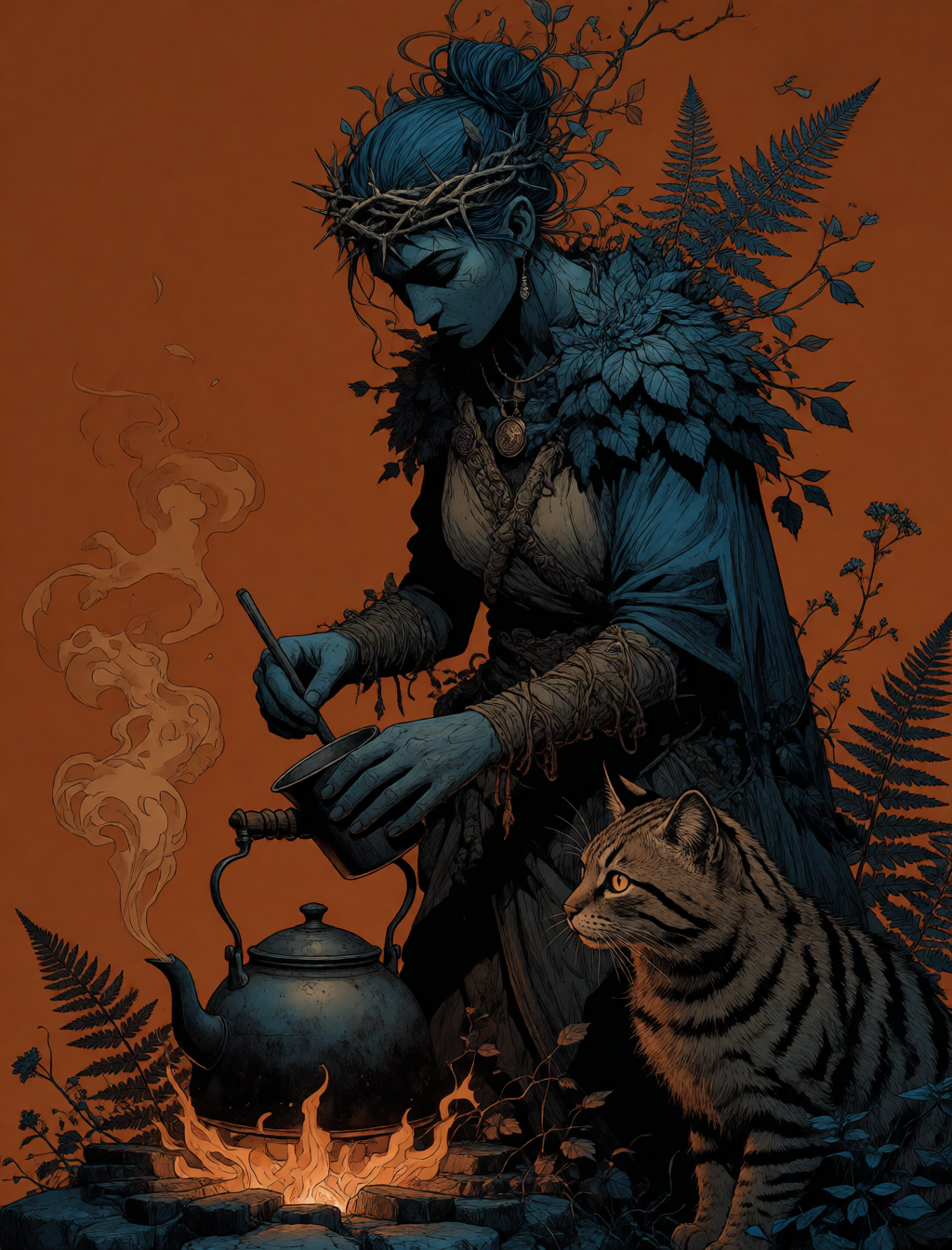
Druids don't become the bear — they ask it. Where other casters bend the world to their will, a druid is simply on good terms with it: plants grow where they point, beasts answer when called, and the right brew mends a wound or a frightened mind. In a fight that makes them summoners and shapers of the battlefield rather than front-line bruisers — though a cornered druid with an empty mana pool is still perfectly willing to settle things the old-fashioned way. Out of a fight, their tea kit makes them the most valuable person in the party far more often than anyone expects.
On Speaking Terms
Most spellcasters take from the world; a druid negotiates with it. Their craft is less transformation than relationship — learning what a grove wants, how a herd thinks, which plants will help and which will lie to you. The bramble seizes an enemy because it was asked nicely; the wolves arrive because they are owed, or simply because they like you. Outsiders mistake this for command, but it is closer to diplomacy conducted with things that have no use for words.
And then there is the tea. Every druid keeps a kit and a kettle, because half the craft is in the brewing: the right leaf at the right moment closes a wound, steadies a panicked mind, or draws the rot of corruption out of a person before it can take root. It is slow, deliberate work, gathered in green places and carried out into grey ones — and a good cup has talked down more enemies and saved more lives than any summoned beast.
Fury
Lose your cool gradually, every consecutive attack adds 1 more damage than the previous one. Consecutive means that no other (non-reaction) action was done between them.
Class bonuses
At character creation a druid has a deep mana pool, picks Fauna or Flora (learning a spell from it at each druid level), and starts with one perk:
Channel Nature (starting perk): If you channelled mana last turn, a spell you cast this turn is empowered — it costs one more mana but gains spell power equal to your druid level, casting a spell this way is particularly noticeable as nature all around becomes alive and noisy.
As they level up a druid unlocks more perks — chiefly the tea, plus various bonuses to their summons (the Beastmaster path leans hardest into those):
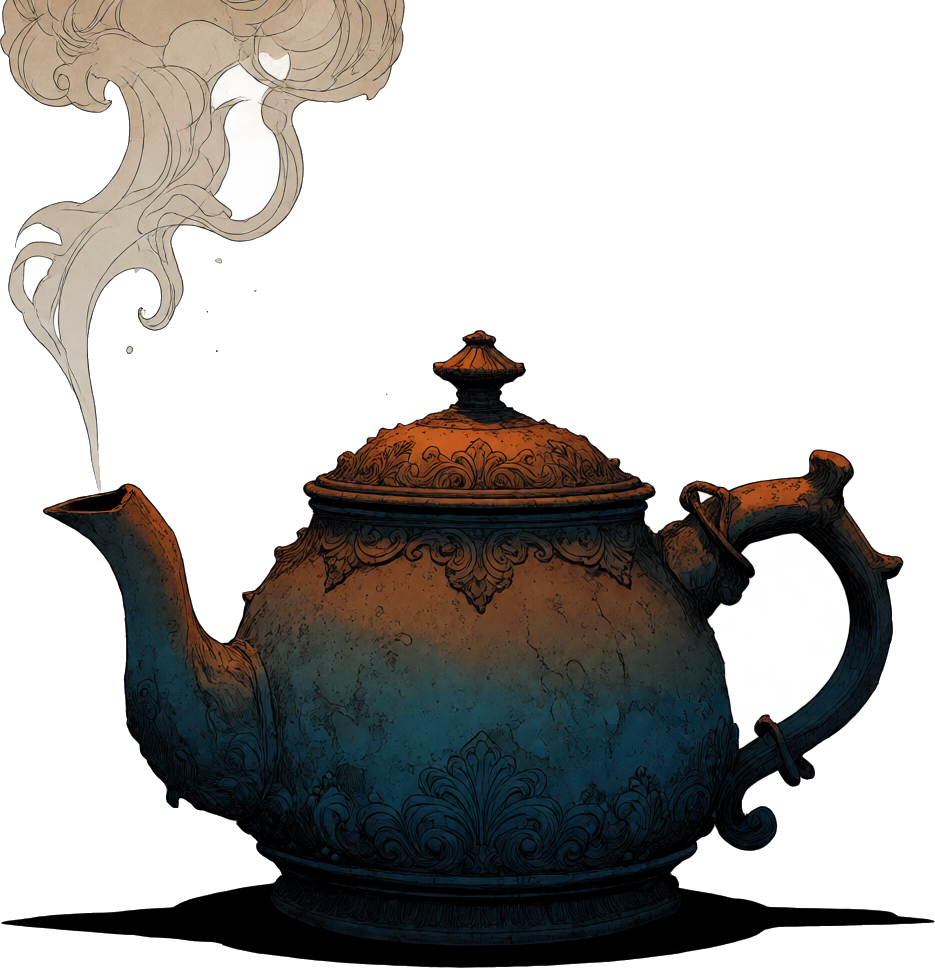 Tea Time: Once per session at rest, you may make a tea ceremony, roll Memory + Herbalism and brew one dose of a tea you know per hit. One dose can be spent at any time during the session to give yourself or anyone present at the ceremony a small boon. Learn three Tea recipe (see below) when you take this perk, and one more whenever you level up the druid class.
Class malus
A druid can only channel when in direct contact with nature. No, a potted plant doesn't work.
Paths
Beastmaster: All in on the pack. Your Fauna summons come tougher and in greater number, and your beasts share your Fury — while a Fury chain is going, your summoned creatures gain the same mounting bonus to their attacks. The druid who wades in at their beasts' side, mana or none.
Grovetender: The gardener and the apothecary. Your Flora spells and your Tea both grow stronger — more potent brews, a larger stock of prepared doses, and rare recipes come easier. Less a fighter than the reason everyone else is still on their feet.
Tea
A druid learns one new tea effect per druid level.
- Soothe — heal a bleeding wound or cleanse a minor disease.
- Calm — settle the nerves: cleanse a Shaken stack.
- Vigour — raise maximum stamina by 2 for a day.
- Clarity — dispel a curse.
- Cleanse — reroll a failed corruption check.
- Long Life — extend a lifespan, raise maximum HP by 3.
- Rapport — warm a wary heart, smooth a relationship.
- Lucidity — let someone see when they are lying to themselves, gain advantage on a Logic check.
- Somniferous — make someone sleepy, they roll any Awareness check at disadvantage.